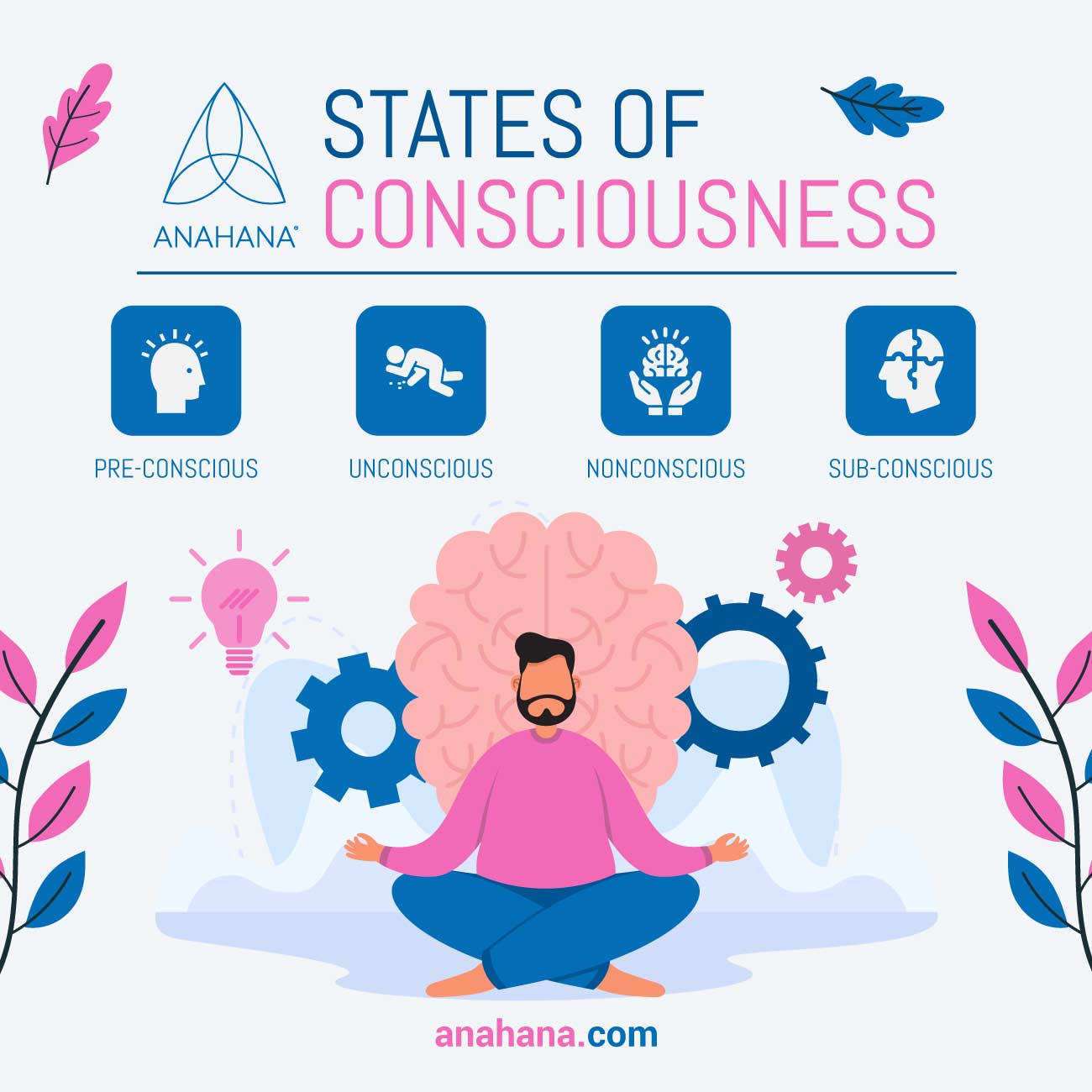
Uncover the mysteries of consciousness, its states, theories, and practical implications. Embark on an enlightening journey through the human mind.
While many are familiar with awake or asleep, consciousness extends far beyond these everyday states.
It's a vast and intricate aspect of our existence, encompassing everything from our most mundane thoughts to our deepest spiritual experiences.
Understanding consciousness can unlock new levels of self-awareness and insight into the human mind. This article comprehensively explores consciousness, its various states, functions, and theories.
Consciousness, often described as being awake and aware, is an enigma that has intrigued philosophers and scientists alike.
The human brain, a complex organ, plays a central role in generating conscious awareness. Through its intricate network of neurons and the interplay of physical processes, consciousness emerges as a fascinating phenomenon, bridging the physical and the mental worlds.
Consciousness is not a single, unchanging state. It is a dynamic and multifaceted spectrum that encompasses a variety of conscious states, ranging from our everyday wakefulness to more profound states of awareness.
From the basic conscious mental states we experience daily, like wakefulness, to more complex states and creature consciousness, these diverse states reflect the multifaceted nature of human consciousness.
Basic Conscious States: Daily, we oscillate between states like wakefulness and sleep, each offering a distinct perspective on our conscious awareness. In its intricate complexity, the human brain facilitates these transitions, reflecting the physical mechanisms underlying our conscious experiences.
Complex States: Human consciousness can experience deeper, more complex states beyond these basic states. These include moments of intense creativity, deep meditation, and even altered states of consciousness. These states often reveal the deeper layers of our conscious experience, providing a window into the profound aspects of human nature.
Creature Consciousness: This term refers to non-human animals' awareness of their surroundings and themselves. Understanding creature consciousness helps us grasp consciousness's evolutionary aspects, highlighting its role in different life forms.
Altered States of Consciousness: These are significant variations from our normal waking state and can be induced by various means such as meditation, drug use, hypnosis, or extreme physical exertion. Each altered state provides a unique lens through which to view the workings of the human mind, offering insights into the less explored areas of human consciousness.
Conscious States and Mental Life: Our conscious states greatly influence our mental lives. They shape our perceptions, thoughts, and emotions, which are crucial in interpreting and interacting with the world around us.
“Consciousness cannot be accounted for in physical terms. For consciousness is absolutely fundamental. It cannot be accounted for in terms of anything else.”
― Erwin Schrödinger
Altered States of Consciousness (ASC) represents a significant shift from our usual mental alertness and awareness state.
These states, ranging from sleep to hypnosis, are key in exploring the nuances of phenomenal consciousness. They reveal the complexity of the human mind, showcasing how consciousness can vary dramatically under different conditions.
In ASC, the brain activity alters, leading to changes in perception, thought, and emotion, providing insights into the workings of our particular physical system.
Sleep is a fundamentally altered state where our usual conscious mental state pauses. Brain activity transitions into patterns distinct from wakefulness during this time, facilitating restorative processes.
This natural state provides a clear example of state and creature consciousness, where the conscious experience is suspended, yet essential physiological and cognitive functions continue.
The meditative state, a form of ASC, represents a shift from ordinary conscious awareness to a heightened state of access consciousness.
In meditation, the mind reaches a profound focus and clarity level, altering the usual patterns of brain activity. This state is often associated with enhanced mental and physical well-being, demonstrating how intentional practices can influence our conscious mental state.
In a hypnotic state, an individual's consciousness is altered, making them more receptive to suggestions and changes in perception.
This state demonstrates the fluidity of phenomenal consciousness, where external suggestions can significantly influence one's conscious mental state.
The changes in brain activity during hypnosis offer a unique perspective on the malleability of consciousness within the human mind.
Dissociative states involve a disconnection from one’s usual conscious mental state, often triggered by extreme stress or trauma.
These states challenge our understanding of state and creature consciousness, as individuals may feel detached from their physical and mental selves.
Brain activity during dissociative episodes can differ markedly from normal states, providing critical insights into the resilience and adaptability of the human consciousness system.
Dreaming represents a unique form of consciousness where brain activity during sleep generates vivid, often illogical, sensory and emotional experiences.
This altered state of consciousness challenges our understanding of phenomenal consciousness, blurring the lines between reality and imagination.
Dreaming is a testament to the extraordinary capabilities of the human mind to create immersive experiences independent of the external physical world.
The concept of five levels of consciousness proposes a structured approach to understanding how our conscious awareness evolves.
These levels range from basic sensory awareness to higher levels of self-consciousness and spiritual connectivity, offering a framework for exploring the depths of human consciousness.
Physical or Sensory Consciousness: This is the most basic level, where consciousness is directly linked to physical sensations and perceptions. It involves awareness of the world through our five senses - sight, sound, touch, taste, and smell. This level of consciousness is about immediate, direct experience of the physical world around us.
Emotional Consciousness: The second level involves our awareness of emotions and feelings. At this stage, consciousness is about sensing the external world and internalizing and reacting to these sensations emotionally. At this level, we start to experience things like joy, sadness, anger, and love, which are fundamental to the human experience.
Rational Consciousness: This level is characterized by thought, reasoning, and intellect. It's where consciousness starts to involve the processes of thinking, analyzing, and making judgments. Rational consciousness allows us to plan, imagine, and conceptualize, moving beyond immediate sensory and emotional responses to a more abstract level of understanding.
Higher Consciousness or Self-Awareness: At this stage, consciousness becomes more introspective. It involves an awareness of oneself as a distinct entity with thoughts, emotions, and experiences separate from others. This level of consciousness leads to self-reflection, self-understanding, and deeper insights into one's own nature and existence.
Spiritual or Cosmic Consciousness: The highest level of consciousness transcends the individual self and connects with a larger, universal sense of being. It's often associated with experiences of profound insight, enlightenment, and a sense of unity with all things. This level of consciousness is where individual awareness expands to encompass a broader, more holistic understanding of reality, life, and existence.
Consciousness functions in various ways, influencing our thinking, feeling, sensing, and intuition. Each function contributes to how we perceive and interact with the world.
Thinking, a fundamental function of consciousness involves rationalizing and processing information.
Our cognitive ability to analyze, reason, and form logical conclusions plays a crucial role in our mental life.
Feeling, another key function, encompasses our emotional responses. Conscious experiences are often colored by feelings, shaping our reactions and interactions with the world and reflecting the emotional dimension of human nature.
Sensing refers to our perception of the physical world through our senses. This function of consciousness allows us to experience and react to our environment, grounding us in the tangible aspects of life.
Intuition, a more elusive function, involves understanding or knowing something without conscious reasoning.
It taps into the depths of the unconscious mind, offering insights beyond the grasp of our conscious thought.
“People will do anything, no matter how absurd, in order to avoid facing their own souls. One does not become enlightened by imagining figures of light, but by making the darkness conscious.”
― Carl Jung, Psychology and Alchemy
Exploring the mysteries of consciousness has led to various fascinating theories. These ideas try to unravel the big question: what is consciousness, and how does it arise?
Let's delve into some of these theories in a way that everyone can grasp.
Integrated Information Theory (IIT): Imagine your brain as a vast network buzzing with information. IIT suggests that consciousness is like the music created when all parts of this network work harmoniously. The more complex the network, the richer the 'music' or consciousness becomes.
Neural Correlates of Consciousness (NCC): This theory is like a treasure hunt in the brain. Researchers are searching for specific brain activities that light up when we experience consciousness. It's like mapping the brain to see which parts are active when aware and conscious.
Physicalism: This theory believes that the key to understanding consciousness lies within the physical workings of the brain. It's like saying everything about our thoughts, dreams, and feelings can eventually be explained by understanding how our brain's machinery operates.
Dualism: In contrast, dualism suggests there's more to consciousness than just physical processes. It's like saying there's a mysterious, non-physical 'something' that works alongside our brain to create our experiences and thoughts.
Panpsychism: This is one of the more intriguing ideas. It suggests that consciousness isn't just a human thing – it's a fundamental part of everything in the universe, big or small. It's like imagining that everything, from rocks to stars, has some form of consciousness, however simple.
Each of these theories offers a unique window into understanding consciousness. They range from viewing it as a result of complex brain networks to something more mystical and widespread.
Understanding consciousness is like piecing together a grand puzzle of what makes us, and possibly everything around us, aware and alive.

The distinction between the conscious and unconscious mind is a fundamental concept in psychology, particularly in theories of consciousness.
The Conscious Mind: This is the aspect of our mind that we are aware of and can think and talk about rationally. It includes our immediate perceptions, thoughts, and feelings. The conscious mind is where our conscious experiences and decision-making processes occur.
The Unconscious Mind: In contrast, the unconscious mind contains thoughts, memories, and desires outside our conscious awareness. According to some theories, the unconscious mind influences our behavior and experiences without awareness.
The interplay between these two aspects of the mind is crucial in understanding human consciousness. It highlights the complexity of our mental life and the depth of our cognitive processes.
Consciousness disorders represent a range of conditions that affect a person's awareness and responsiveness.
Disorders of Consciousness: These include conditions like coma, vegetative state, and minimally conscious state. Severe disturbances in conscious awareness and responsiveness characterize these disorders.
Psychiatric Disorders: Certain psychiatric disorders, like schizophrenia and dissociative identity disorder, also involve alterations in consciousness. These conditions can affect an individual's perception of reality and sense of self.
Understanding these disorders is important for grasping the full range of human consciousness, including its limitations and vulnerabilities.
There is a significant connection between consciousness and Yoga Nidra, a form of guided meditation. Yoga Nidra, often called "yogic sleep," is a powerful technique with profound implications for exploring and understanding consciousness.
Yoga Nidra offers a journey through different levels of consciousness. As practitioners move from external awareness to inner awareness, they traverse various states of consciousness, from waking to dreaming and potentially even deep sleep while remaining awake.
This exploration provides unique insights into the nature of consciousness. One of the profound aspects of Yoga Nidra is its ability to delve into the subconscious and unconscious layers of the mind.
This practice can reveal deep-seated thoughts, memories, and emotions, offering a window into aspects of consciousness that are usually inaccessible during normal waking hours.
Consciousness is a profound and complex aspect of human life. Exploring its various states, functions, and the theories surrounding it offers valuable insights into the human mind and our understanding of ourselves.
Consciousness refers to our awareness of our thoughts, feelings, and environment. It encompasses our subjective experiences and our sense of self.
Brain activity is closely linked to consciousness. Certain patterns of neural activity are associated with specific conscious experiences.
While science has made significant strides in understanding consciousness, it remains a partially unexplained phenomenon. Theories continue to evolve as our knowledge expands.
The concept of creature consciousness suggests that other animals also experience forms of consciousness, although different from human consciousness.
Altered states of consciousness, like sleep or meditation, can affect our mind, from restorative functions to enhanced self-awareness.
https://www.ncbi.nlm.nih.gov/pmc/articles/PMC5924785/
https://iep.utm.edu/consciousness/
https://www.nature.com/articles/s41583-022-00587-4
https://www.newscientist.com/question/four-main-theories-consciousness/
The contents of this article are provided for informational purposes only and are not intended to substitute for professional medical advice, diagnosis, or treatment. It is always recommended to consult with a qualified healthcare provider before making any health-related changes or if you have any questions or concerns about your health. Anahana is not liable for any errors, omissions, or consequences that may occur from using the information provided