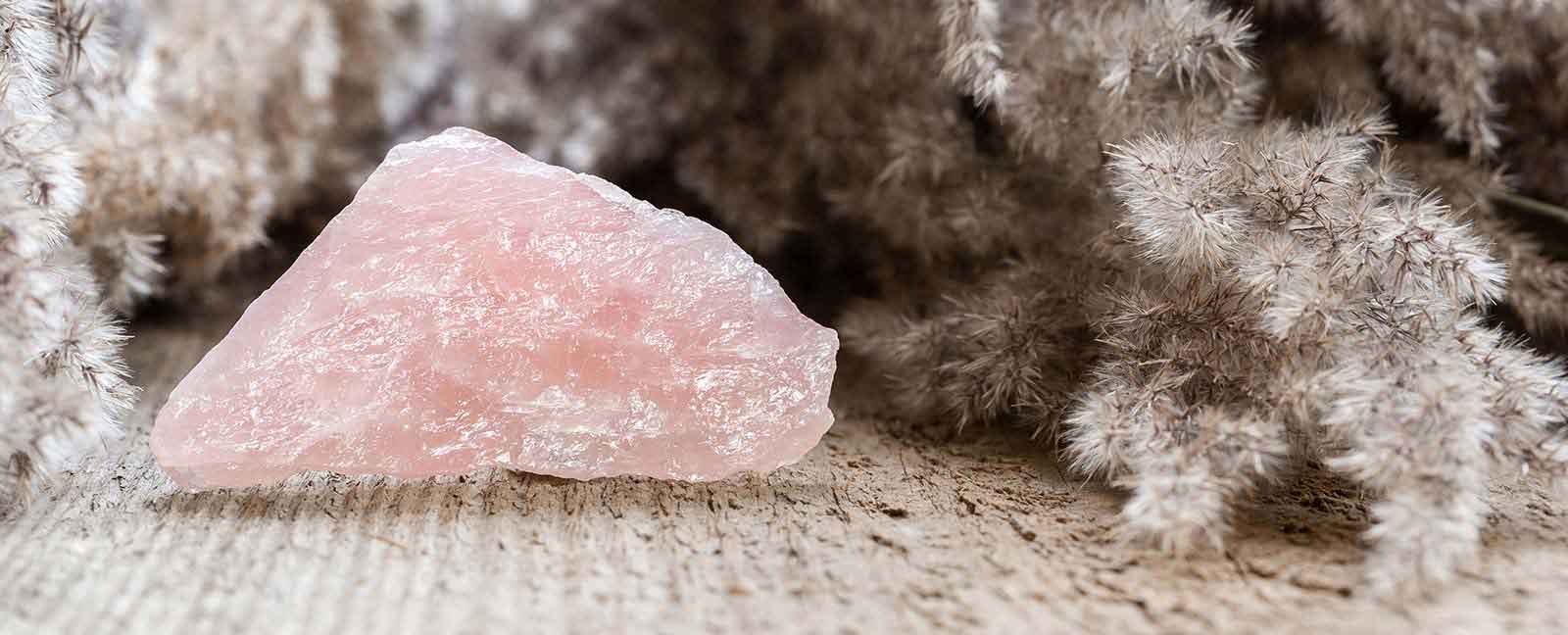
If you have been drawn to rose quartz, you are in good company. People reach for this soft pink stone when they want to soften toward themselves, recover from a breakup, deepen a relationship, or simply keep a tangible reminder of self-compassion on the desk or nightstand. It is one of the most widely recommended starter crystals for a reason: the symbolism is straightforward, the use cases are practical, and a small piece costs less than a coffee. This guide walks through what rose quartz is said to do, where those associations come from, and how to actually use it in daily life.
Quick Answer
Rose quartz is a pale pink variety of quartz traditionally called the "stone of unconditional love." It is associated with the heart chakra and is used in meditation, jewelry, and home placement to support self-love, emotional healing, and gentler relationships with others.
Rose Quartz Meaning and Symbolism
Across crystal traditions, rose quartz is consistently framed as the heart's stone. Author Judy Hall, in The Crystal Bible, calls it the most important crystal for the heart and the heart chakra, describing it as a stone of unconditional love and infinite peace that teaches the true essence of love. That language carries through most modern sources: Energy Muse describes it as opening the heart to compassion and self-love, and Tiny Rituals frames it as a "Heart Stone" connected to divine feminine energy.
Symbolically, the pink color does a lot of work. It is read as warmer than white but softer than red, sitting in the visual middle between purity and passion. That gives rose quartz an unusually broad emotional range: it shows up in rituals for romantic love, for mother-child bonds, for friendship, and for the kind of love a person has to learn to direct at themselves. The Crystal Council and Charms Of Light both note this multi-relational quality, with rose quartz cast as supportive across romantic, platonic, and familial bonds.
Healing Properties and Benefits
Before going further: there is no published scientific evidence that crystals produce healing effects beyond what would be expected from placebo, ritual, and intention-setting. The associations below come from crystal traditions and contemporary practitioners. Many people still find rose quartz meaningful as a focal object for reflection, journaling, and meditation, and that is a legitimate use even without a clinical mechanism.
Emotional Benefits
Rose quartz is most associated with emotional healing of the heart. According to Judy Hall, it is "calming and reassuring" and is often suggested for trauma, crisis, and grief. Crystal Vaults describes it as helping to dissolve emotional wounds, fears, and resentments, while Charms Of Light highlights its association with self-forgiveness and trust in relationships. In practice, people use it as a tangible anchor for working through heartbreak, softening self-criticism, and supporting compassion toward others.
Physical Benefits
Physical associations are looser and more contested. Some traditions link rose quartz to skin clarity, the female reproductive system, and circulation around the heart. Hibiscus Moon Crystal Academy notes its use for both emotional and physical matters of the heart, and it shows up frequently in modern skincare gua sha and facial roller tools. Treat these as cultural associations rather than medical claims; nothing here replaces professional care for skin, fertility, cardiovascular, or any other health concern.
Spiritual Benefits
Spiritually, rose quartz is described as cleansing the auric field and inviting connection with what several sources call divine or unconditional love. The Crystal Council notes it inspires appreciation for beauty and art, and Tiny Rituals connects it to goddess and feminine-divine energy. For many practitioners, this shows up less as dramatic transformation and more as a slow tilt toward gentleness in how they hold themselves and others.
Chakra and Energy
Rose quartz is associated, almost universally, with the heart chakra (Anahata). When the heart chakra is described as open and balanced in chakra traditions, the qualities that emerge are compassion, empathy, self-acceptance, and the capacity to give and receive love without armoring. A few sources extend this: Tiny Rituals sometimes adds the throat chakra (helping speak love clearly), and Crystal Vaults adds a root-chakra dimension (grounding love into stability and security).
Element correspondences vary across traditions. Water is the most common assignment and the one that fits the stone's soft, flowing emotional symbolism. Crystal Vaults assigns Fire, and Charms Of Light splits between Earth and Water. If you are layering rose quartz into elemental work, Water is the safe default. For a broader overview of how stones map to the seven chakras, see our guide to the chakra system.
Zodiac and Birthstone Associations
Rose quartz is not a traditional birthstone for any calendar month. Its associations are zodiac-based and most often listed for:
- Taurus: Reinforces Taurus's natural appreciation for beauty, comfort, and steady, loyal love.
- Libra: Supports Libra's pull toward partnership, fairness, and harmony in relationships.
- Scorpio: Offered as a softening counterweight to Scorpio's intensity, especially around vulnerability and trust.
If you do not see your sign listed, that does not mean rose quartz is off-limits. Zodiac correspondences are guidance, not prescriptions, and many people work with the stone regardless of their birth chart.
How to Use Rose Quartz
Meditation
For meditation, hold a tumbled rose quartz in your non-dominant hand or rest it on the center of the chest while lying down. Spend a few rounds of slow breathing noticing the weight and temperature of the stone, then bring to mind a person you want to soften toward — including yourself. The stone is not doing the work; it is acting as a physical anchor that keeps the practice from drifting.
Jewelry and Wearing
A pendant worn over the sternum, a bracelet, or a ring all keep rose quartz in regular contact through the day. Pendants are the most heart-chakra-aligned placement. At Mohs hardness 7, rose quartz is durable enough for daily-wear jewelry, but it can still be scratched by harder stones like topaz, sapphire, and diamond, so store it separately if you can.
Home and Workspace
Common placements include the bedroom (often near the bed or on a nightstand, associated with relationship and self-love work), the living room (welcoming, communal energy), and beside a workspace as a visual reset point during stressful days. A larger piece can anchor a corner; a small tumbled stone on a desk works just as well. Crystal practitioner Hibiscus Moon often recommends placing rose quartz in spaces where stress accumulates, as a soft prompt to slow down.
Cleansing and Charging
Cleansing rituals are about clearing whatever you feel the stone has absorbed; charging is about reinforcing your intention. Common methods:
- Moonlight: The consensus choice. Leave rose quartz on a windowsill overnight, ideally around a full moon.
- Smoke: Pass the stone briefly through smoke from sustainably sourced sage, palo santo, frankincense, or copal.
- Sound: A singing bowl, bell, or tuning fork held near the stone for a minute or two.
- Selenite or clear quartz: Resting rose quartz on a selenite plate is a low-effort, repeatable option.
- Intention: Hold the stone, name what you want it to hold for you, and let that be the charge.
A note on water and sun: brief rinses in cool running water are generally fine, but prolonged submersion can dull the surface, and direct, prolonged sunlight is best avoided. True rose quartz is reasonably stable, but consumer pieces are sometimes mislabeled (see Mineralogy below), and the rarer pink quartz is photosensitive and will fade. Moonlight sidesteps the risk entirely.
Rose Quartz in History
Rose quartz has a long association with love and beauty across multiple ancient cultures. A folk etiology often attributed to Greek mythology links the pink color to Aphrodite (and her Roman counterpart Venus), with one version of the story describing rose quartz as forming where the blood of Aphrodite and Adonis mingled — a romantic explanation for the stone's hue, passed down through crystal lore rather than confirmed classical sources.
Across these traditions, the consistent thread is the link between rose quartz, the heart, and acts of devotion. That continuity is part of why the modern symbolism still lands so easily; the stone has been carrying a similar story for a very long time.
Mineralogy and Physical Properties
- Chemical formula: SiO2 (silicon dioxide), the same as all other quartz.
- Crystal system: Trigonal. Rose quartz typically forms in massive, anhedral chunks rather than the well-defined hexagonal points of clear quartz or amethyst.
- Hardness: 7 on the Mohs scale, hard enough to scratch glass and to handle daily wear.
- Color: Pale pink to rose, often slightly cloudy or translucent.
- Color cause: Current accepted explanation is microscopic fibrous inclusions of a silicate mineral related to dumortierite. Older sources attributing the pink to rutile or to manganese/titanium have been superseded.
One distinction worth knowing: massive rose quartz (what almost all jewelry and tumbled stones are) is mineralogically different from the rarer pink quartz, which forms as well-defined euhedral crystals and gets its color from aluminum-phosphorus color centers activated by natural irradiation. Pink quartz is photosensitive and fades in sun; rose quartz is stable. Many consumer sources blur the two terms.
FAQ
What does rose quartz symbolize?
Rose quartz symbolizes unconditional love in all its forms — romantic, platonic, familial, and self-directed. It is widely described as the heart's stone and is the most consistently recommended crystal for emotional healing and compassion work. The associations are remarkably stable across both ancient cultures and modern practitioners.
What chakra is rose quartz associated with?
Rose quartz is associated with the heart chakra (Anahata) across essentially every crystal tradition. A few sources mention secondary connections — the throat chakra for speaking love clearly, the root chakra for grounding love into security — but heart is the primary, near-universal assignment.
Can rose quartz go in water?
Brief contact with cool running water is fine for cleansing. Prolonged soaking, salt water, and very hot water are best avoided, as they can dull the polished surface over time. If you want a water-free option, moonlight, smoke, or resting it on selenite all work without any risk to the stone.
Does rose quartz fade in sunlight?
True rose quartz is reasonably color-stable but can fade slightly with prolonged direct sun exposure. The rarer pink quartz fades much faster and is genuinely photosensitive. Since the two are commonly confused at retail, the safe rule is to charge rose quartz under moonlight and avoid leaving it on a sunny windowsill for days at a time.
How can you tell if rose quartz is real?
Genuine rose quartz is rarely a vivid, uniform hot-pink — most authentic pieces are pale, slightly milky, and uneven in color. It feels cool to the touch, has a hardness of 7 (it will scratch glass, and a steel knife will not scratch it), and natural pieces often contain visible inclusions or slight fractures. Suspiciously perfect, bright pink, bubble-free pieces are often dyed glass or another material.
Is rose quartz good for beginners?
Yes — rose quartz is one of the most commonly recommended starter crystals alongside clear quartz, amethyst, and black tourmaline. Its symbolism is simple, its use cases are intuitive, and it is widely available and inexpensive. There is no special technique required to start working with it; carrying a piece in your pocket counts.
Where should I place rose quartz in my home?
The two most common placements are the bedroom (often associated with relationship and self-love work) and the living room (welcoming and communal). A small piece on a desk or near a workspace can serve as a visual reminder to soften during stressful stretches. There is no strict rule — placing it where you will actually see and notice it is more important than picking the "correct" room.
References
Hall, Judy. The Crystal Bible. Walking Stick Press, 2003.
Rose quartz — Wikipedia (mineralogy and color-cause references)
Disclaimer
The contents of this article are provided for informational purposes only and are not intended to substitute for professional medical advice, diagnosis, or treatment. It is always recommended to consult with a qualified healthcare provider before making any health-related changes or if you have any questions or concerns about your health. Anahana is not liable for any errors, omissions, or consequences that may occur from using the information provided.